Beat the heat.
A properly specified ceramic tint transforms daily driving in Cyprus — cooler cabin, blocked UV, protected interior and a factory-clean look. Non-metallic films that don't interfere with GPS, radio or key fobs.
Massive heat rejection
Ceramic films reject up to 90% of infrared heat — the cabin cools faster and stays cooler.
99% UV block
Protects your skin and stops dashboards, leather and trims from fading and cracking.
Glare reduction
Cuts harsh glare from headlights and low sun for safer, less fatiguing driving.
Security & privacy
Holds shattered glass together and shields the interior from prying eyes.
Ceramic — not dyed, not metallic
Dyed films fade to purple, reject little heat and age badly in Cyprus sun. Metallic films handle heat better but interfere with GPS, DAB radio, key fobs and tyre-pressure sensors. Ceramic films use nano-ceramic particles that block infrared and UV without any metal, so signals pass through untouched and the colour stays true for the life of the film. It's the only category we recommend for modern vehicles.
Shades and the law
We install shades from very light (70% VLT) to limo-dark (5% VLT). Front side windows in Cyprus must pass a legal amount of light — we'll guide you to the darkest legal option for the front and any shade you like for the rear. Windscreens can take a full-vision heat-rejection film that stays visually clear while blocking most infrared and UV.
How we install
- Interior protection — seats, panels and electronics are covered.
- Glass prep — every window deep-cleaned inside and out.
- Pattern cutting — pre-cut per model or plotter-cut to fit exactly, with no visible edge in the door channel.
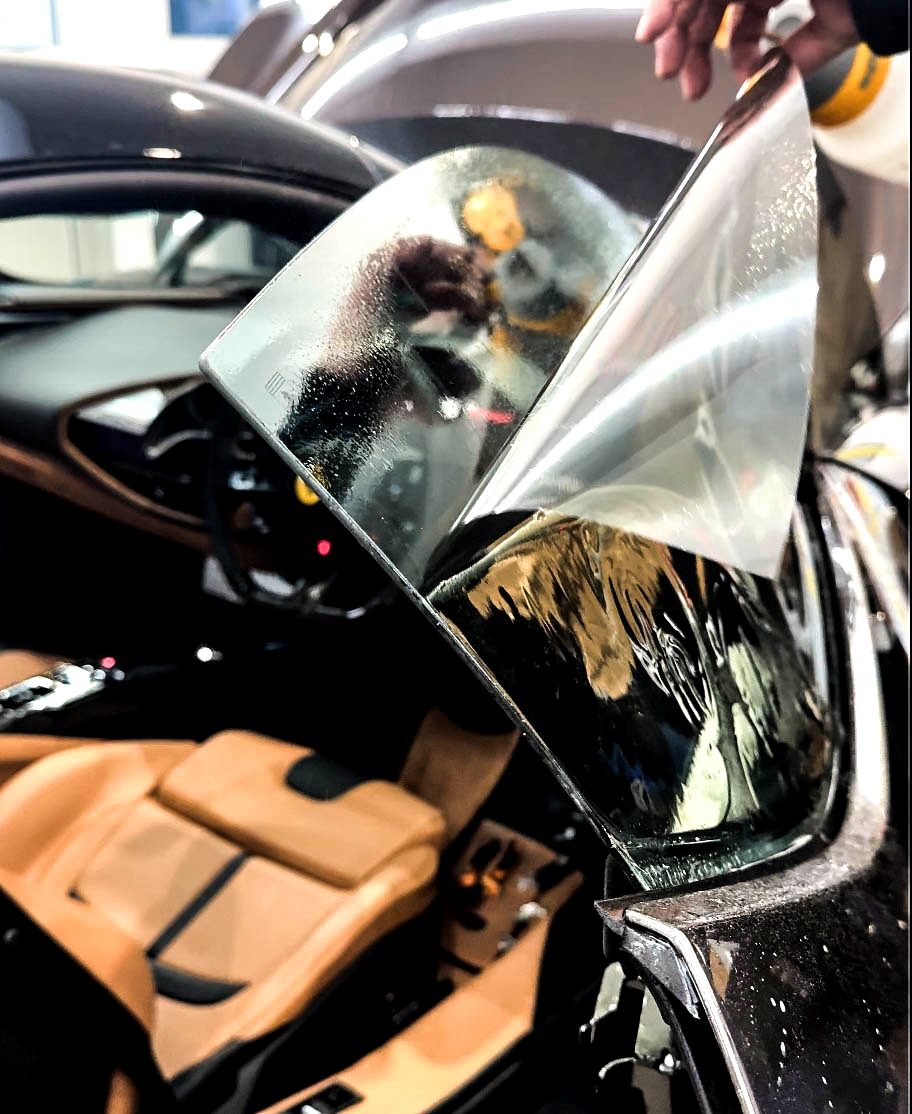
- Application — slip-solution applied, squeegeed and edge-heated so it sits flush and bubble-free.
- Cure — 3–7 days to fully cure. Small water pockets can appear during that time; they always disappear.
Aftercare
Don't roll the windows down for the first 3–5 days while the adhesive cures. Clean with a soft microfibre and an ammonia-free glass cleaner — ammonia degrades film. Premium ceramic films carry a lifetime warranty against bubbling, peeling, cracking and colour change, transferable while the film stays on the original vehicle.
Window Tinting, answered
A typical sedan or SUV takes 3–5 hours. Complex glass — curved rear screens, coupes — may take longer.
Not with a quality ceramic film professionally installed. Bubbling and purple discolouration are symptoms of cheap dyed films and poor installation.
A well-chosen shade won't. Very dark rear tints (5–15%) reduce the rear view at night — we'll help you balance look and visibility.
Yes — replacement glass, matching an existing tint, or a windscreen-only heat-rejection film are all routine jobs.
Ready when you are
Drop by the Limassol studio or send photos of the car — we'll recommend the right package and hold you a slot.